
Some of the easiest language moments with Zina have happened inside stories and experiences she already loves. A new phrase does not arrive as a problem to solve. She takes it in, repeats it sometimes, watches what happens when she uses it and slowly connects it to everything else she knows.
Adults can be suspicious of a phrase until we understand every part of it. Toddlers are more adventurous. They may repeat something before they could give a dictionary definition, partly to test its power. Does this word make Pappa laugh? Does it bring the book back? Does it make the game happen again? Meaning grows through those responses.
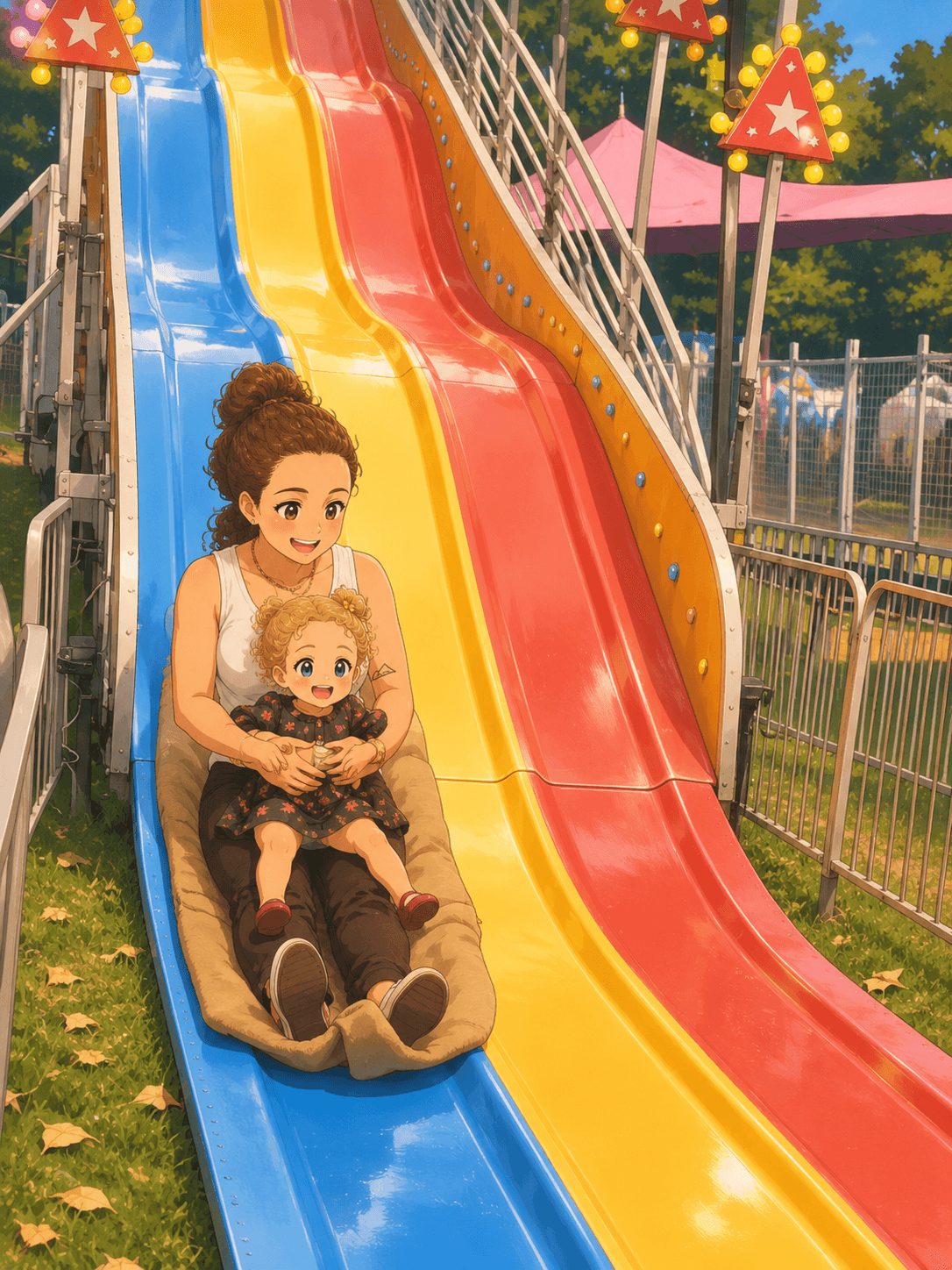
Zina has a dependable way of identifying experiences worth keeping: she says, 'Again?' At a local festival we went down a large slide together on a potato sack several times. Now the memory itself has become a shared story. Either of us can bring it up, and after a few excited words she reaches the important question: 'Again?' The same thing happens after being thrown up in the pool, swung around like a superhero or reaching the end of a favourite book.
Familiarity leaves room for language
When Zina already knows what the rabbit, bear or fox is about to do, she does not have to spend all her attention understanding the plot. The illustration, the remembered action and the emotional tone are already pointing in the same direction. A new Russian word has somewhere to land.
This is why a familiar story can be more useful than a perfectly designed vocabulary card. A card asks, 'Can you name this?' A story says, 'Look what is happening.' The child can understand without performing, and the language becomes part of an event rather than an answer in a test.
Repetition builds a network of meaning
A phrase may begin as sound. On another reading it becomes familiar. Later Zina may join the final word, point before it is spoken or use the phrase in a completely different situation. She is not simply storing isolated translations. She is building connections between the word, the picture, the action, the person speaking and the feeling of the moment.
That process needs time. I try to slow down enough to give the pause that needs a pause and the idea that needs time. Being engaged at her level does not mean filling every silence. It means holding the moment properly and giving her enough support to think for herself.
Follow the child's version of 'again'
Small changes can help a familiar story carry more language:
- Pause before a repeated word and leave room for the child to join, without insisting.
- Use the same gesture whenever an action word appears.
- Bring one phrase from the book into the bath, car, kitchen or garden.
- Let a toy character borrow a favourite line during play.
- Keep the translation stable enough for recognition, while allowing the conversation around it to stay playful.
- When the child asks for the experience again, treat that request as an invitation to repeat the language too.
Every child and family is different. Follow your child's interest, keep the experience warm, and seek professional advice if you have concerns about speech or language development.
Bring another language into storytime
Read a familiar book in your family language.
LinguaLayers creates printable translated reading labels for books you own or have permission to adapt—so you can keep the pictures, characters and page turns your child already loves.
Try four pages free